noun, and also verb
A new AI model took your whole department, cheaper, by the Monday. What you still own is a car that drives itself, and a man your father knows has a use for it. They automated the driving. Somebody still has to make it pay.

Not a scenario list with a difficulty slider. There is a prologue, a five-city stretch that quietly grades you, an application you can be turned down for, and one ending.
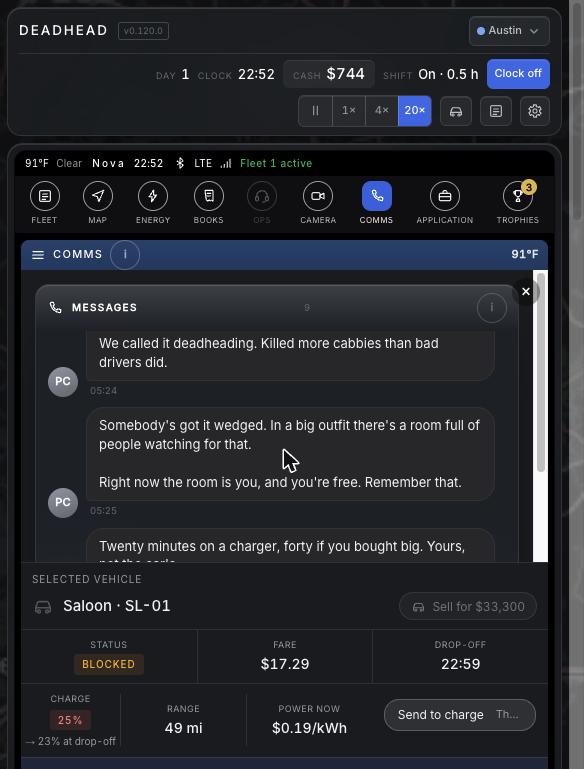
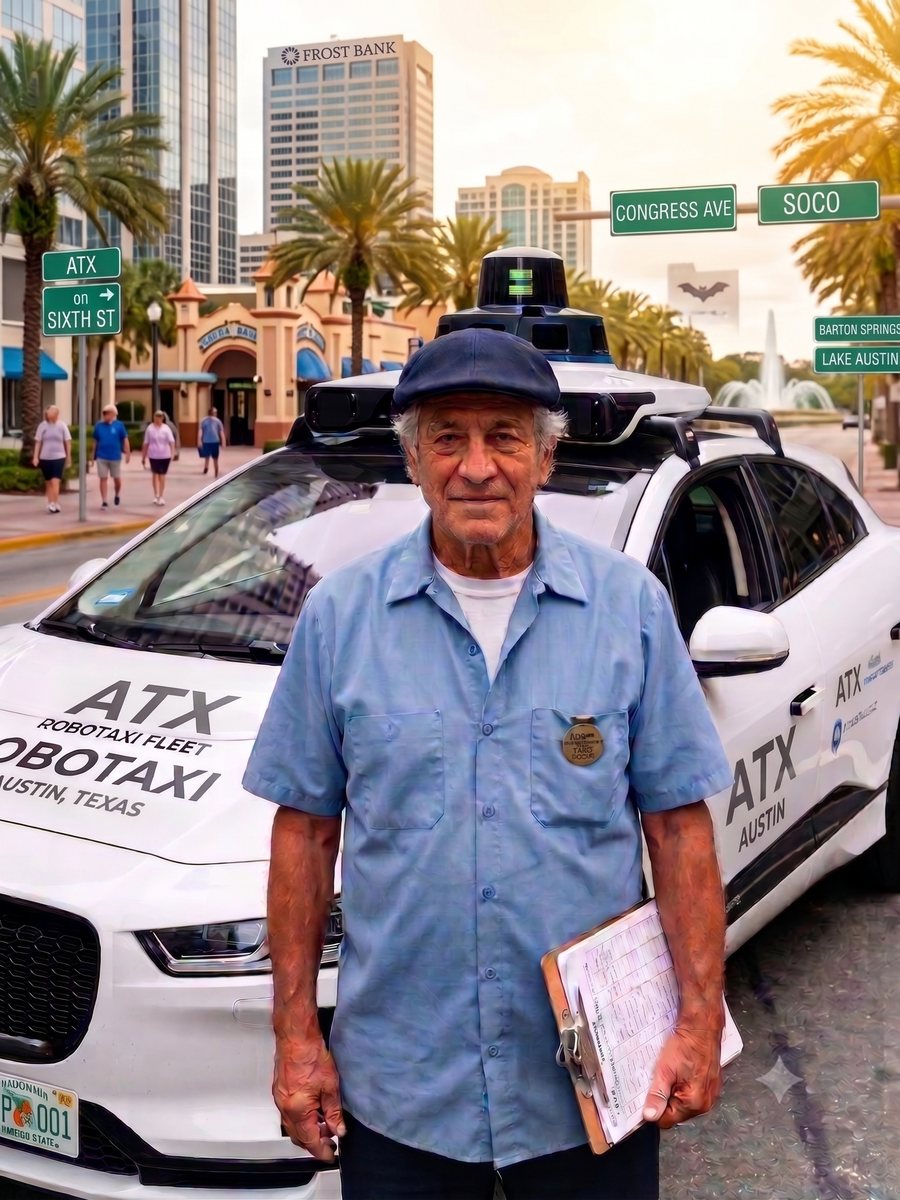
Paolo Cortez drove a cab for forty-one years and got out while getting out was still his own idea. He co-owns a dealership now, he is recruiting for an operations centre in San Francisco, and he is not pleased about what he is about to talk you into. He calls you first because your father is a good reference.
You already meet one of the requirements: you own a car that drives itself. Austin is where you find out what that is worth. He walks you through the first shift — which offers to take, why the empty miles matter more than the meter — then goes quiet and lets you get it wrong.
Austin, Dallas, Miami, Tampa, Orlando. Each one opens when you clock off a full shift in the last. There is one bank across all five, not a balance per city — so a car you left parked in Miami is still billing you at midnight while you work Tampa, and it will keep doing that until you notice.
Underneath all of it, nine requirements are being counted without being announced. Miles supervised. Shifts completed. Acceptance rate. You are being assessed for something you have not applied for yet.
And the word in the title is a column on your books. Deadhead miles — the ones you drive empty to reach a passenger — are counted against every fare, every shift, and they are usually the figure that decides whether a day made money. Sense 1 is not a metaphor here. It is arithmetic.
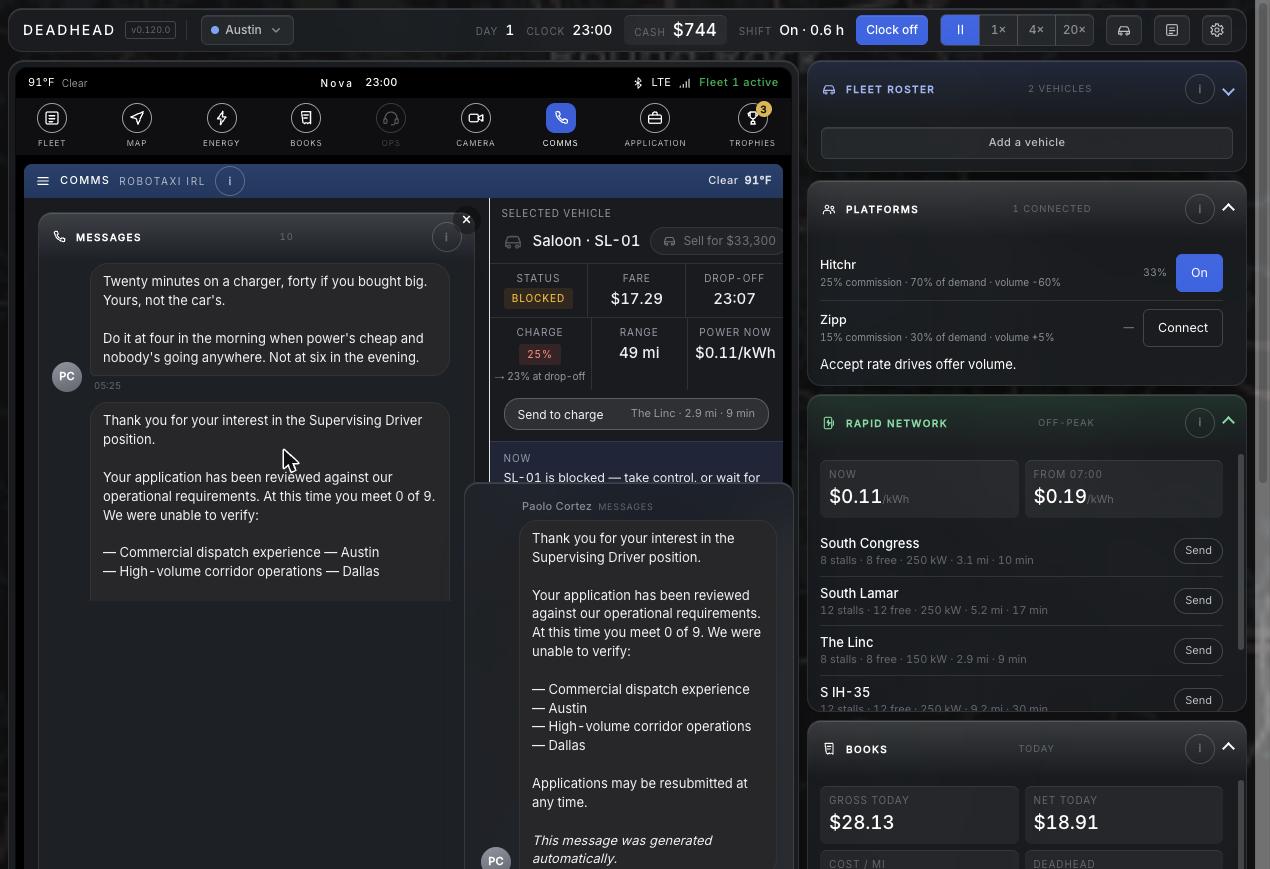
Apply too early and the same mailbox writes back with an honest “you meet 3 of 9” and tells you which six — not a locked door and no explanation.
The role you applied for is supervising driver, and it is not the job you have been doing. One car. No fleet. No fast-forward — San Francisco runs at 1× because you are physically in it, and there is nobody to delegate to. The city you have been working toward is the one where you personally have to sit there.
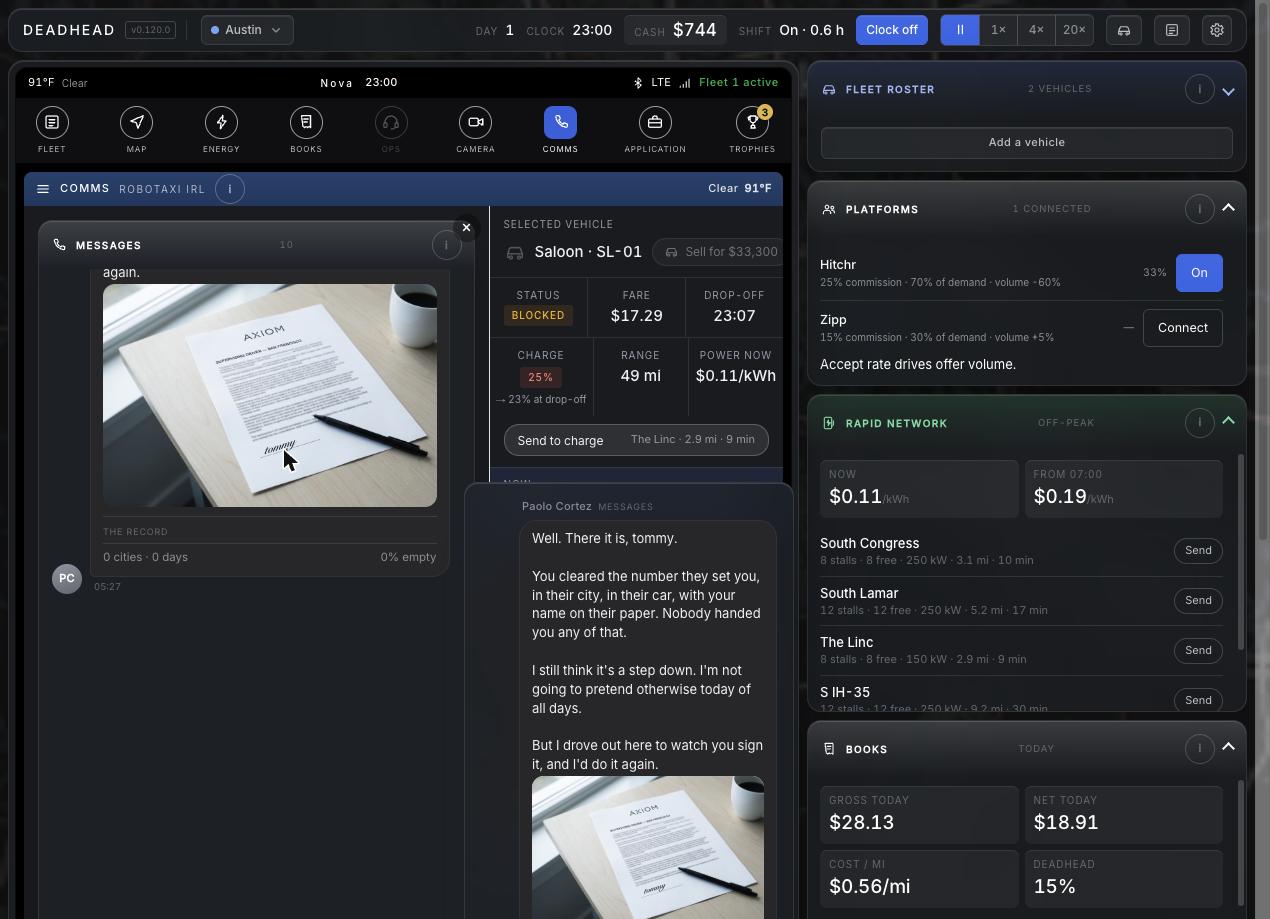
Clear it and the game ends on a signed contract. Not a score, not a win screen, not a leaderboard position — a document, and Paolo in the room, who still thinks you made a mistake.
He never comes around, and the game never argues him out of it. That question is left with you.
Austin is the one city that threw the app companies out and lost. Voters rejected Proposition 1 56–44 in May 2016, Uber and Lyft switched off the next morning, and they stayed gone for a year — until the state legislature voided Austin’s rules and every other city’s along with them.
Forty-one years in a cab before he got out, while getting out was still his idea. He walks you through your first day, then goes quiet — and speaks again only once you've been stuck long enough to need it. He isn't a tooltip. He has opinions about what you're doing, and he's usually right.
A standing Now line always names the single most useful next thing, so you're never lost. It never tells you what to choose.
He has one opinion about the whole job, and he never drops it — see Act three ↑
Paolo’s first message is waiting. Nobody makes you accept it — the prologue lets you decline, and means it.
▶ Start Act oneThe story is real, but so is this: you play the whole thing through a car’s centre console, and most of what you do is read offers and decide. If a fleet roster and a cost-per-mile breakdown sound like the opposite of a story to you, better to know that here than thirty seconds in.
Cars only earn while you're watching them. Clock off and they park — and still owe their fixed cost at midnight.
The meter, what you keep after commission, and the empty miles to the pickup. Two platforms, 25% and 15%, competing for the same demand.
Send a car to a real charging site with real stall counts and peak kW. A 72 kW site charges slowly because it genuinely does.
Switch zones on and off one at a time. Every city has its own demand curve by hour, and no two read the same way.
When a car gets wedged the console cuts to its camera feed and you drive it out yourself. Optional — the incident clears eventually. Whether that's soon enough is your problem.
Cost per mile broken out live into depreciation, energy, maintenance, insurance and software. Twenty-one trophies, and a leaderboard if you want one.
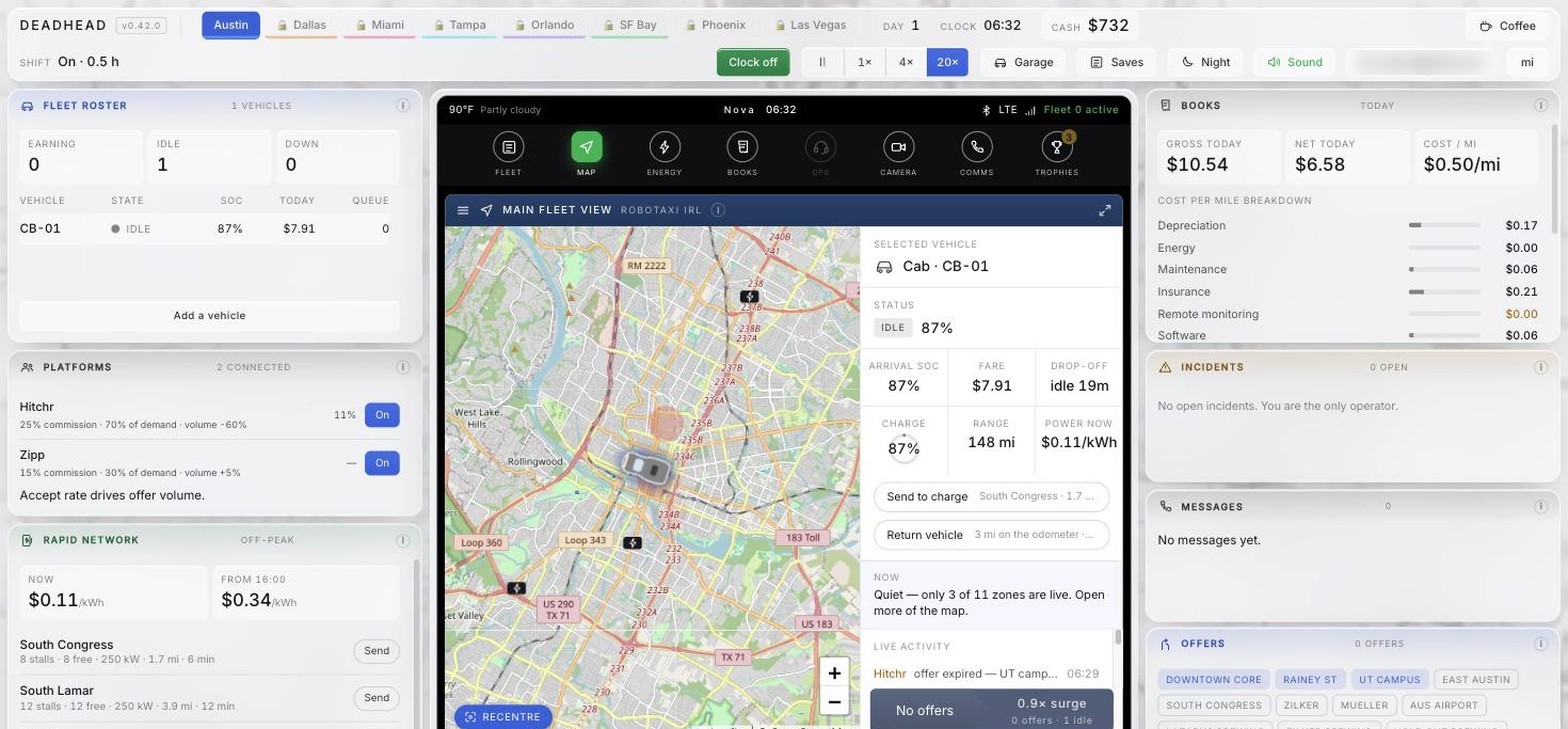
Recorded on an earlier build, and left alone on purpose. Panels have moved since — the console was reorganised twice, the city strip became a dropdown, three more cities shipped and every car got a real photo — but the shift itself plays out exactly like this, and re-recording two minutes of honest play is harder than admitting the date.
Real service areas, real electricity tariffs, real charging sites, real cost per mile — plus a full annotated tour of the console. Open this if you want the receipts.
Twelve markers on one real shift, in order. Hover any note and it lights the marker it belongs to.
Austin is the tutorial. Each next city unlocks when you clock off a full shift in the one before. New York and Las Vegas are dashed out — nobody has launched there, so neither has the game. New York is Paolo's own city; he's never actually worked one of these there.
Not a per-city balance. A car you left parked in Miami is still billing this number at midnight while you work Tampa.
Cars only earn while you're watching them — you're the remote operator. 1×, 4× or 20×, except in San Francisco, where you're physically in the seat and it's locked at 1×.
Every car: what it's doing, its charge, what it has earned today, and how many rides are stacked behind the current one.
Hitchr takes 25% and carries 70% of demand. Zipp takes 15% and carries 30%. Your acceptance rate drives how much either sends you.
$0.19/kWh at 08:00, $0.34 from 16:00 — Austin Energy's real time-of-use pricing. Every city runs its own utility's published rates.
Actual locations with their real stall counts, peak kW and distance. Research Blvd never queues at 18 stalls — and charges at only 72 kW, 32 minutes away.
Cars follow actual road geometry inside Austin's published service area. Where the real map excludes somewhere, so does this one.
Charge, range, what power costs right now, and what it would take to send it to a charger. Also what it's worth if you sell it, and what you'd still owe.
One button takes the strongest job on the board. The multiplier next to it is live demand — 1.8× here, because it's the morning rush.
Gross, net and cost per mile, split live into depreciation, energy, maintenance, insurance and software. This is the panel that stops flattering you first.
$51.41 on the meter, $38.56 after commission, and 5.6 miles driven empty to reach the passenger. Only the third one decides whether you made money.
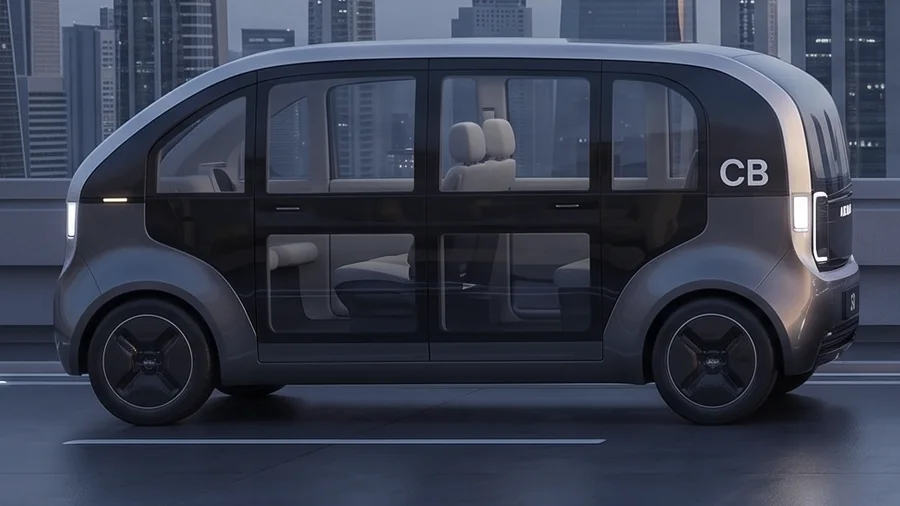
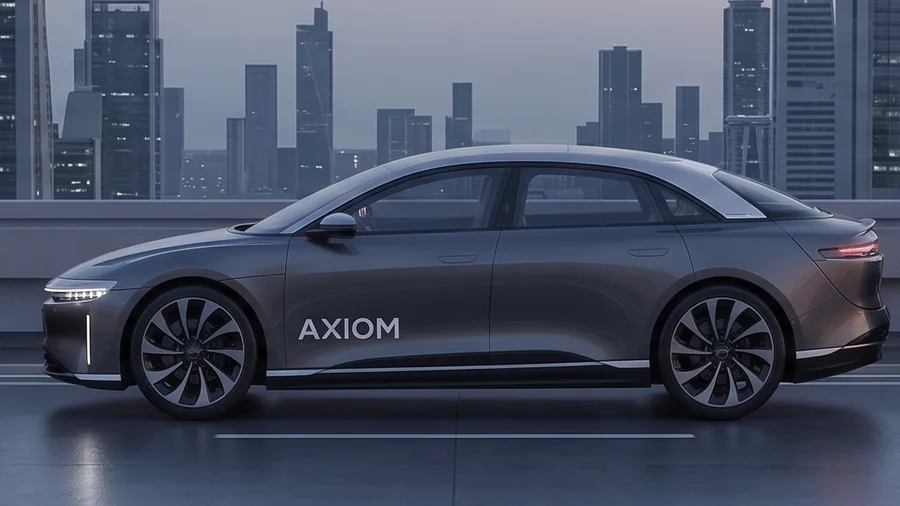
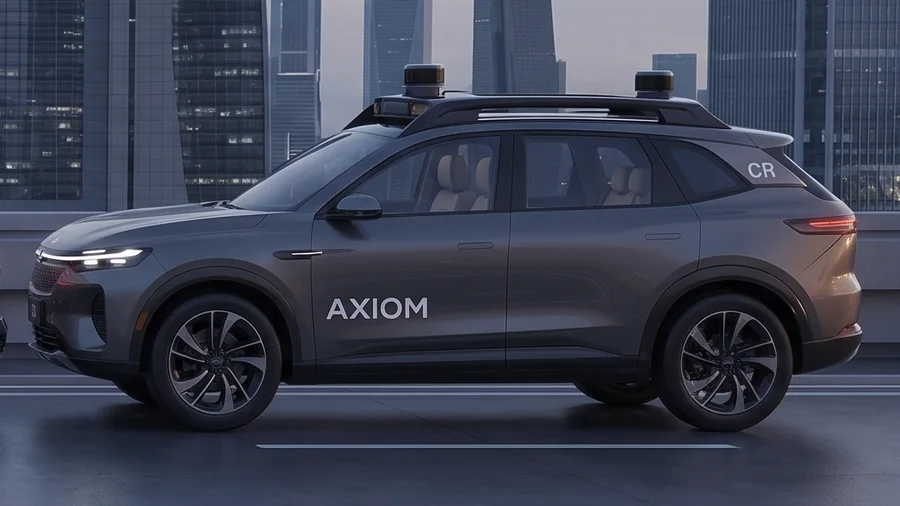
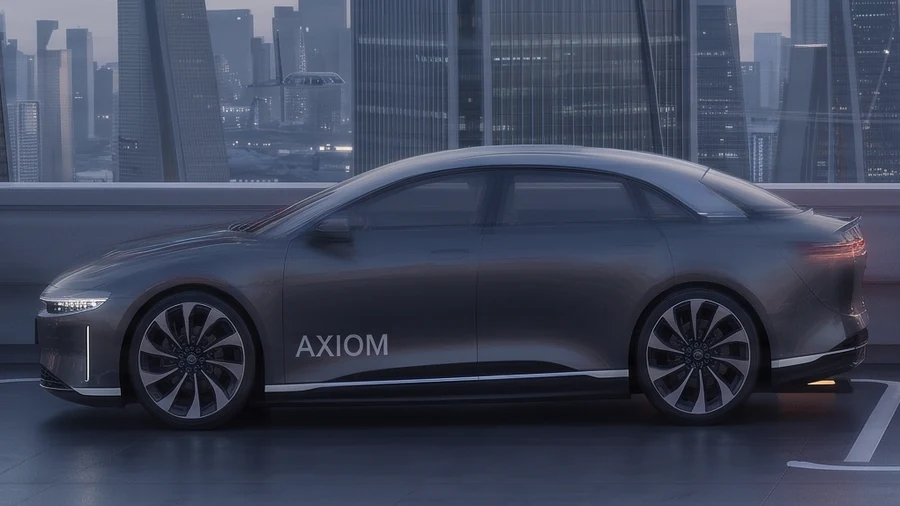
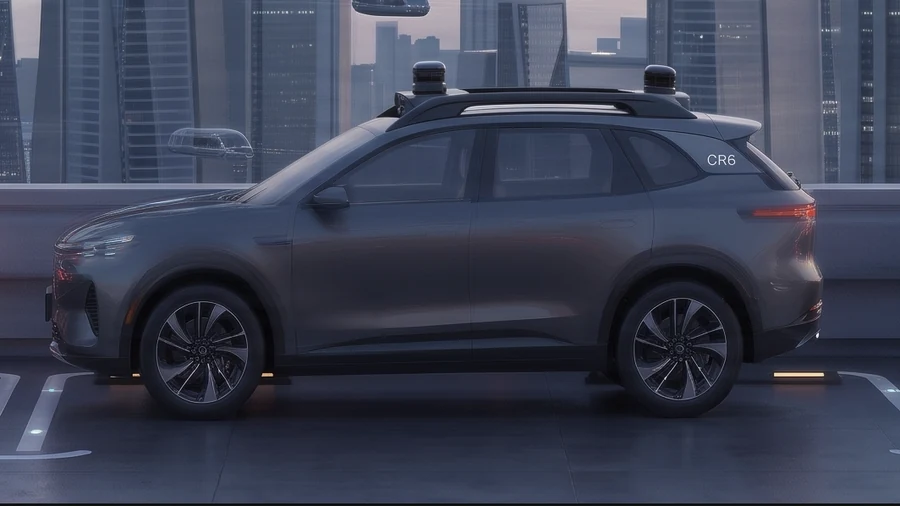
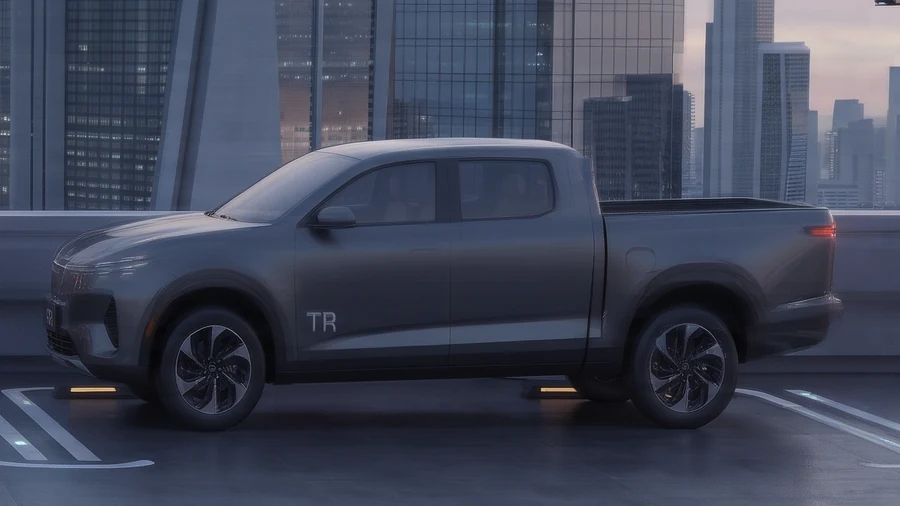
Axiom does not exist. The spec ladder does — real pack sizes, real range, real cost per mile, from a 48 kWh four-seat cab to a 123 kWh light truck. None of it is flavour text: each figure feeds a system that is already running.
CBNo wheel, no pedals, cheapest to own — and on a charger constantly. Four seats means you never take a full group.
SLThe entry trim: cheap to hold, short on legs. Rentable solo on day one, same as most of this lineup — only the Truck needs more than an $800 start.
CRMore pack, more frontal area — the same distance for more money. Needs $502 to rent — comfortably inside an $800 start.
SLLThe longest range in the catalogue. It sits on a charger less than anything else here.
CR6The biggest pack short of the Truck, spent carrying a third row nobody has booked yet.
TRWorst cost per mile by a wide margin, 38 minutes to fill, and $152 owed every midnight before it moves.
Everything around the hardware — Hitchr, Zipp, Meridian, Halo — is invented. The cars and the numbers are not. That line is deliberate.
That is the whole of it: a story you can fail, and an ending you have to qualify for. Free, in a browser tab, right now.
▶ Play Deadhead freeLocal saves by default, or sign in for cloud saves synced across devices. Passwords are never transmitted — key derivation runs in your browser.
Sign-in card remembers up to four accounts as coloured circles — pick yours, or add a fresh one. Prefer to skip accounts entirely? One tap plays fully offline on just this device.
Both themes, and the layout genuinely reworks itself between a phone, a laptop and an ultrawide.
No ads, nothing behind a paywall, no second version that costs money. If it turned out to be worth something to you there's a tip jar — and if it didn't, that's completely fine.